
How Ceramic Coating Protects Paint From Florida Sun & Salt
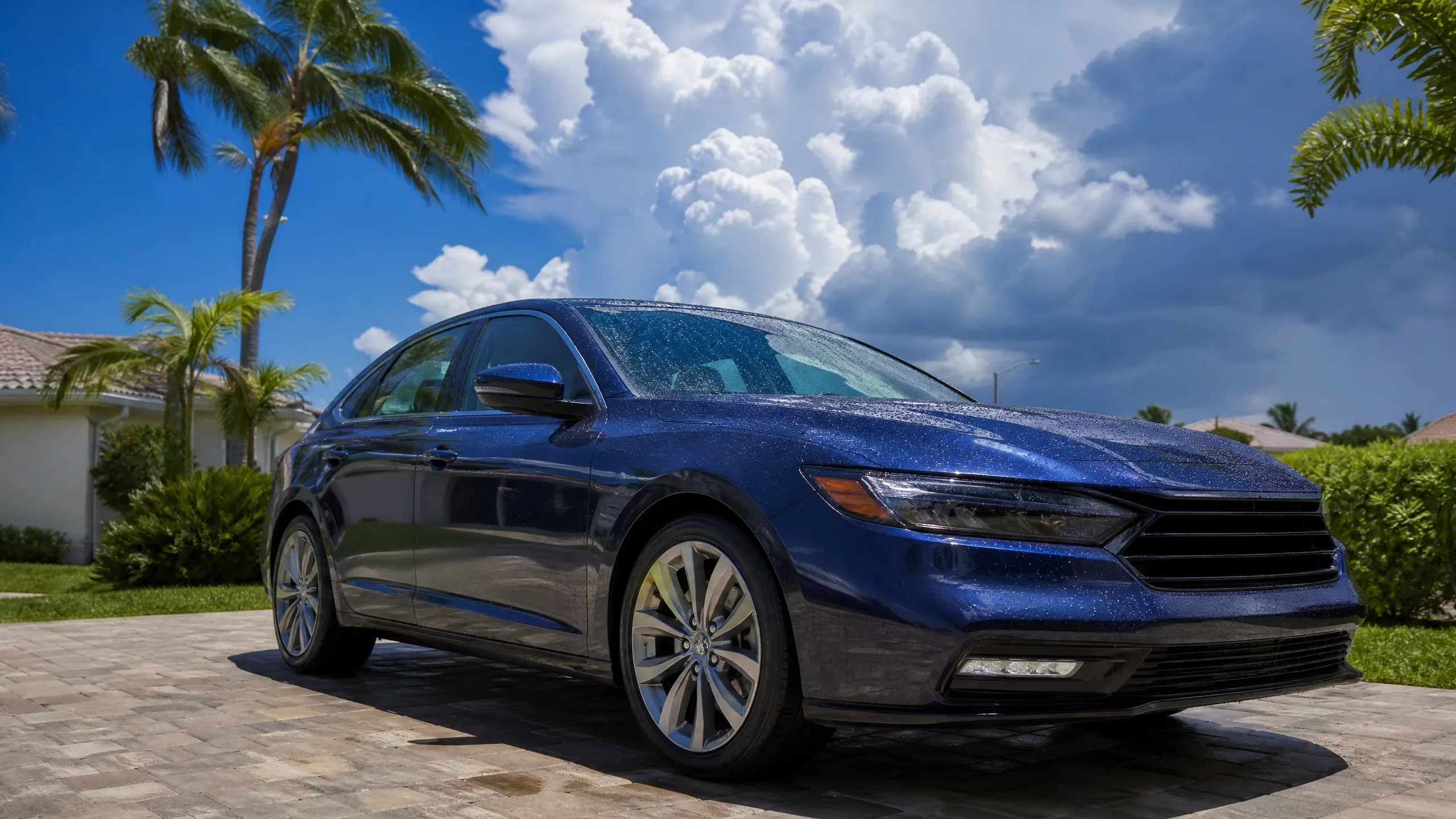
Ceramic coating earns its keep in Florida like nowhere else, because paint protection here is not a luxury problem. Between the sun, the storm cycle, salt air off the bay, and two love bug seasons, a vehicle parked outside in Riverview is under some form of chemical or UV attack almost every single day.
This post breaks down each threat and exactly how a coating counters it. For tiers and pricing, see our ceramic coating page.
The Four Threats Florida Throws at Your Paint
Most of the country deals with one or two of these. Riverview gets all four, most of the year: relentless UV, hard water plus the afternoon storm cycle, salt air riding in from Tampa Bay, and acidic contamination from bug seasons and bird activity. Heat amplifies every one of them, because chemical reactions on a 140-degree hood run faster than on a cool one.
Here is each threat up close.
Threat 1: Sun and UV
UV radiation degrades whatever it touches, and the EPA's sun safety guidance exists because it does the same to skin. On a vehicle, UV oxidizes the clear coat, which shows up as chalky haze, faded color, and a finish that no longer reflects light cleanly. Dark cars fade visibly, and reds turn pink.
How the coating counters it: the cured layer sits on top of your clear coat and takes the UV exposure itself, the way sunscreen takes it for skin. The paint underneath keeps its color and gloss for years instead of summers.
Threat 2: Hard Water and the Storm Cycle
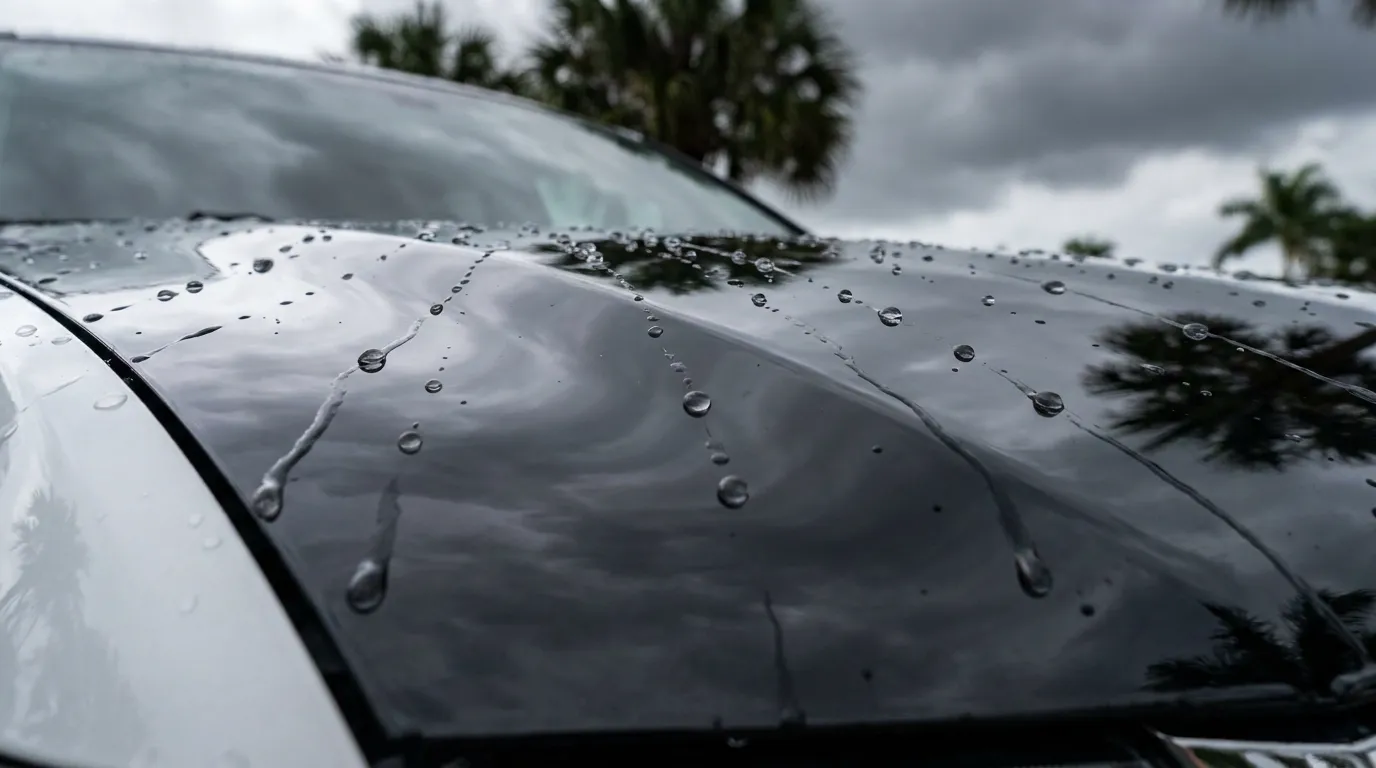
Our summer routine is a 3 PM downpour followed by full sun an hour later. Mineral-heavy droplets sit on hot paint and bake dry, leaving hard water spots that etch into unprotected clear coat. Repeat that cycle most afternoons from June through September, and unprotected paint keeps the scars.
How the coating counters it: the surface is hydrophobic, so water gathers into beads and rolls off instead of sitting in mineral-loaded droplets. What little dries on the surface releases with a rinse instead of etching in.
Threat 3: Salt Air
You do not need to park at the beach. Salt air travels well inland across the Tampa Bay area, and from Apollo Beach up through Riverview it settles on every outdoor surface. Salt accelerates corrosion on exposed metal and degrades unprotected finishes faster than dry inland air ever would.
How the coating counters it: salt cannot bond to the slick, chemically resistant surface the way it clings to bare paint. It rinses away instead of accumulating, taking its corrosive potential with it.
Threat 4: Love Bugs and Acidic Fallout
Twice a year, around May and again in late summer, love bug season coats every front bumper on US-301. Their residue is acidic, and in Florida heat it starts etching within hours. Bird droppings and tree sap do the same work year round.
How the coating counters it: the coating is a sacrificial chemical barrier. Acidic contamination attacks the coating's surface instead of your paint, and it releases with a quick rinse instead of a scrubbing session. You still want it off same-day, but the coating turns an emergency into a chore.
The Multiplier: All Four at Once
The reason Florida ages paint so fast is not any single threat. It is the stack. A truck that commutes on I-75 collects bug residue in the morning, bakes under UV at lunch, catches a storm at three, and dries into water spots by five. Every day. A System X coating counters the whole stack at once with one hard, hydrophobic, UV-stable, chemically resistant layer, which is why coatings built for this workload carry registered warranties of 2, 6, or 10 years. Our tier comparison guide covers which level fits your parking situation.
What the Coating Does Not Excuse
A coated car in Florida still wants a rinse when bugs and droppings land, a proper wash every week or two, and shade when shade is easy. The coating multiplies the value of small habits. Our maintenance guide covers the whole routine in ten minutes of reading.
Frequently Asked Questions
Is Florida sun really that much harder on paint?
Yes. More intense UV for more hours across more of the year means oxidation that might take a decade up north shows up here in a few summers, especially on cars parked outside.
Does salt air matter if I live inland in Riverview?
It matters less than beachfront parking, but bay air carries salt well inland. It is one more contributor that unprotected paint absorbs and coated paint rinses off.
Do afternoon storms at least keep my car clean?
The opposite. Rain deposits minerals and pulls dust out of the air, then the sun bakes it all onto hot paint. A storm followed by sun is how water spots are manufactured.
Which coating tier is best for a car parked outside?
Outdoor parking argues for stepping up a tier, since the coating works harder here. The honest breakdown is in our tier guide, or text us your situation at (813) 553-1553.
Built for Florida, Installed in Your Driveway
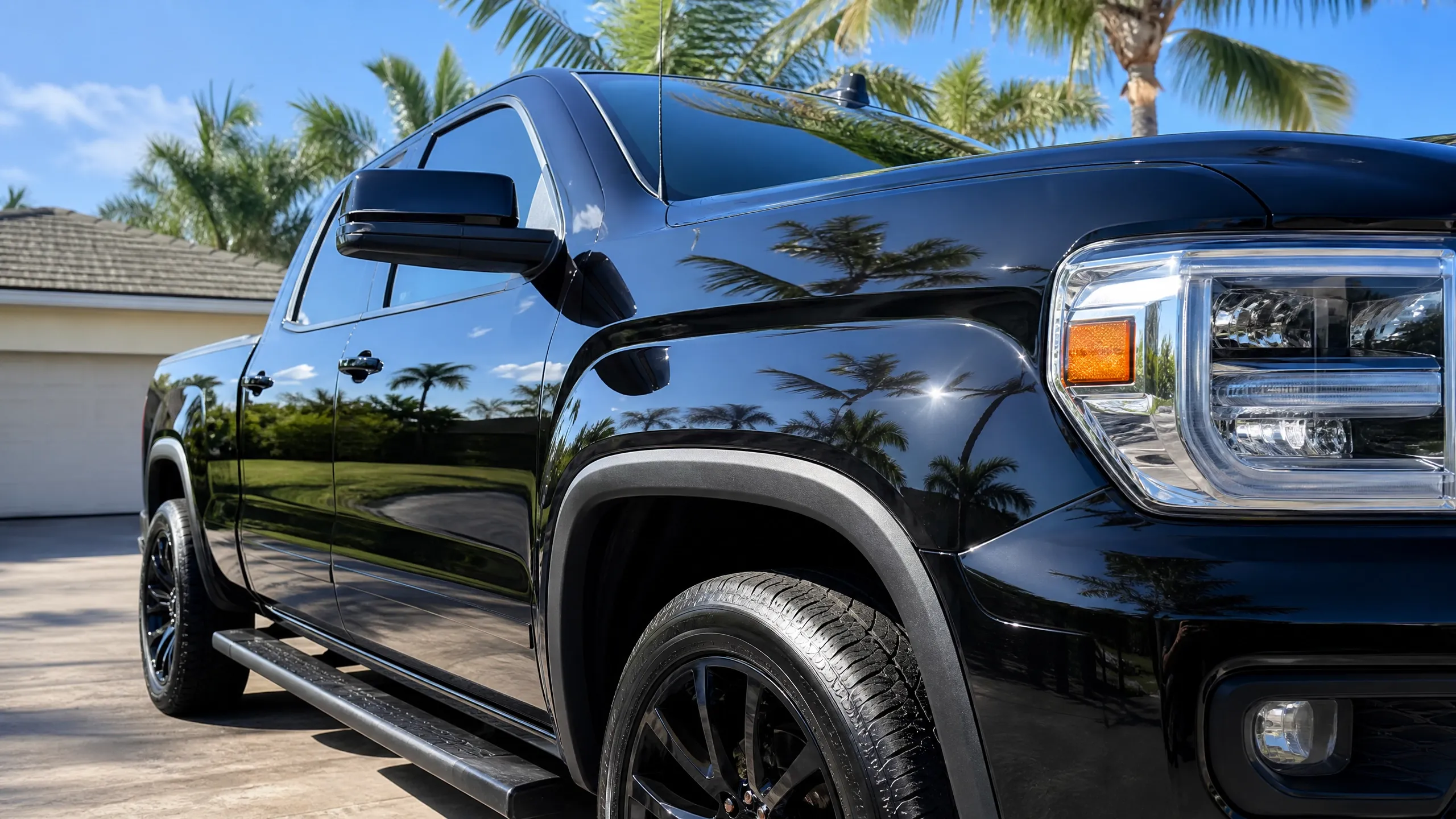
This is the exact workload our coatings are chosen for. From Apollo Beach to Boyette, we install System X protection at your home or office across Riverview, Brandon, Tampa, and the surrounding Tampa Bay area, with our own power and water. Book online or call or text (813) 553-1553.
Certified technicians. System X warranty-backed. 72-hour satisfaction guarantee. Licensed and insured, with 146+ five-star Google reviews.